Church can help sports by flexing values, strengthening human dignity, pope says
Pope Leo XIV, who considers himself "a decent amateur tennis player," issued a letter on the value of sport, calling on the Church to help strengthen the needed harmony between people's physical and spiritual development.
He released it on the day the Winter Olympic Games begin, highlighting how the Games remind us of the need to be one human family in "a world thirsting for peace."
"We need tools that can put an end to the abuse of power, displays of force and indifference to the rule of law," he wrote.
 Carol Glatz
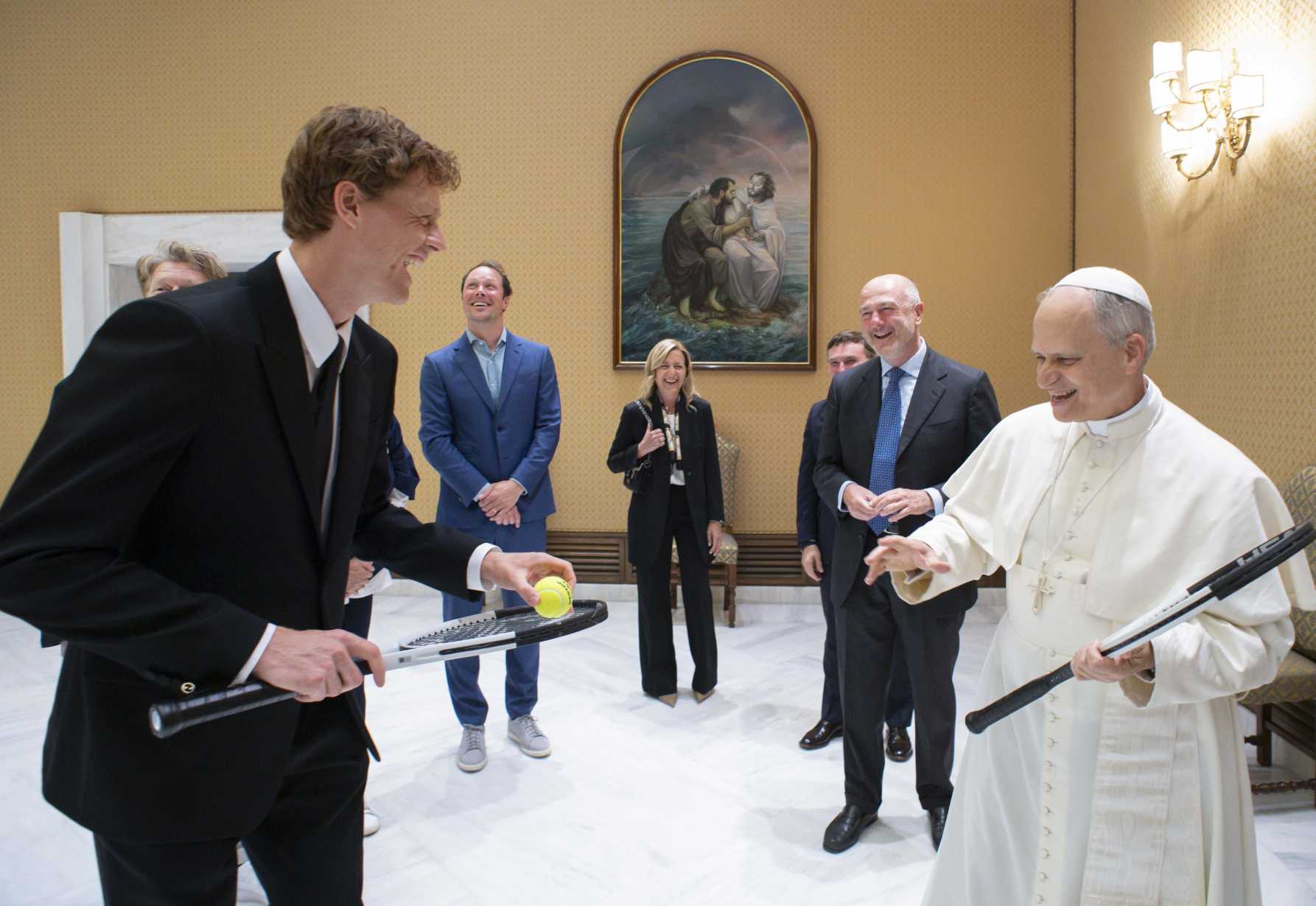
Jannik Sinner, the No. 1 rated tennis player in the world, jokes with Pope Leo XIV, after giving him a tennis racket May 14, 2025, during a meeting at the Vatican. The pope said he did not think they should try to play in the meeting room because they might break something. (CNS photo/Vatican Media)
VATICAN CITY (CNS) -- Just as the 2026 Olympic Winter Games in Milan Cortina were about to begin, Pope Leo XIV called on the Catholic Church to recognize sport as an opportunity to offer much-needed human and spiritual guidance.
With so many dangers and distortions threatening the integrity of athletics and the dignity of players, the Church can help strengthen the needed harmony between people's physical and spiritual development, he wrote, helping sport become a place "for athletes to learn to take care of themselves without falling prey to vanity, to push themselves to their limits without harming themselves and to compete without losing sight of fraternity."
Pope Leo, who considers himself "a decent amateur tennis player," issued a letter on "the value of sport," Feb. 6, titled "Life in Abundance," from Jesus' declaration, "I came so that they might have life and have it more abundantly," from the Gospel according to St. John (10:10).
The need for holistic, integral human development is critical, he wrote, because "the danger of narcissism … permeates the entire sporting culture today. Athletes can become obsessed with their physical image and with their own success, measured by visibility and approval."
And sometimes sports can take on a "quasi-religious dimension" with athletes perceived as "saviors," he wrote. "When sport claims to replace religion, it loses its character as a game that benefits our lives, becoming instead aggrandized, all-encompassing and absolute."
The pope dated and released the eight-page letter the same day the XXV Winter Olympic Games in Milan and Cortina d’Ampezzo began Feb. 6. Set to run until Feb. 22, the international sporting event will be followed by the XIV Paralympic Games March 6-15.
Offering his "greeting and good wishes to those who are directly involved" in the Games, the pope also encouraged all the world's nations to "rediscover and respect" the Olympic Truce as a symbol and promise of hope and reconciliation in "a world thirsting for peace."
"We need tools that can put an end to the abuse of power, displays of force and indifference to the rule of law," he wrote, decrying the "radicalization of conflict and a refusal to cooperate" as well as a "culture of death."
The world is witnessing "lives broken, dreams shattered, survivors' trauma, cities destroyed -- as if human coexistence were superficially reduced to a video game scenario," he wrote, repeating St. John Paul II's warning that aggression, violence and war are "always a defeat for humanity."
The Olympic Truce is built on the belief that participating in public sport with a spirit of "virtue and excellence" promotes greater fraternity, solidarity and the common good, he wrote.
"International competitions offer a privileged opportunity to experience our shared humanity in all its rich diversity," he wrote. "Indeed, there is something deeply moving about the opening and closing ceremonies of the Olympic Games, when we see the athletes parade with their national flags and in the traditional garments of their countries."
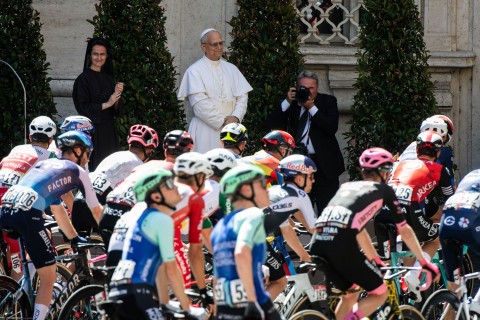
These global gatherings "can inspire us and remind us that we are called to form one human family" and that "the values promoted by sport -- such as loyalty, sharing, hospitality, dialogue, and trust in others -- are common to every person, regardless of ethnic origin, culture or religious belief," he wrote.
While the pope praised the power and potential of the Olympics, the bulk of the letter was dedicated to all levels of sport, from those engaged in informal fun to serious athleticism.
Like his predecessors, Pope Leo highlighted the virtues of engaging in physical activity and competition as well as warned against current risks that threaten healthy values.
He criticized the perennial problems of using sports as a platform to push political or ideological interests, doping and seeking profits or winning at all costs, warning against the "dictatorship of performance."
"When financial incentives become the sole criterion, individuals and teams may also fall prey to subjecting their performance to the corruption and influence of the gambling industry," he wrote. "Such dishonesty not only corrupts sporting activities themselves, but also demoralizes the general public and undermines the positive contribution of sport to society as a whole."
He also criticized "pay-to-play" programs, which often require costly fees for children to participate, when organized sports should be accessible to everyone.
"In other societies, girls and women are not allowed to participate in sports. Sometimes, in religious formation, especially of women, there is a mistrust and fear of physical activity and sport," he wrote in the letter, encouraging greater efforts to make sport more accessible to diversity and fraternity, too.
He also warned against "transhumanism" or technologies, including AI, being applied to enhance performance, artificially separating body and mind, and "transforming the athlete into an optimized, controlled product, enhanced beyond natural limits."
"Finally, we must question the growing assimilation of sport into the logic of video games," Pope Leo wrote, pointing to the "extreme gamification of sport," turning it into "simply a device for consumers" and disconnecting it from "concrete relationships."
The pope said, "There is an urgent need to reaffirm integral care of the human person; physical well-being cannot be separated from inner balance, ethical responsibility and openness to others," calling on the Church "to recognize sport as an opportunity for discernment and accompaniment and to offer human and spiritual guidance."
He asked that every national bishops' conference have an office or commission dedicated to sport and help unite parishes, schools, universities, oratories, associations and neighborhoods in a "shared vision."
"Pastoral accompaniment of sport is not limited to moments of celebration, but takes place over time through sharing the efforts, expectations, disappointments and hopes of those who play daily on the field, in the gym or on the street," he added.
He called for seeking out those "who have combined passion for sports, sensitivity to social issues and holiness," such as St. Pier Giorgio Frassati, who "perfectly combined faith, prayer, social commitment and sport." Pope Leo canonized the 24-year-old Italian Sept. 7 at the Vatican.
The fullness of life "integrates our bodies, relationships and interior lives," the pope wrote. "In this way, sport can truly become a school of life, where all can learn that abundance does not come from victory at any cost, but from sharing, from respecting others and from the joy of walking together."