Everyone can be a good Samaritan, pope says in message for world's sick
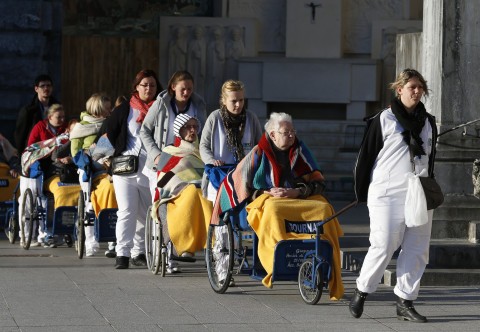
To love one's neighbor -- whom Jesus identifies as anyone who has need of us -- is within everyone's reach, Pope Leo XIV said in his message for the 34th World Day of the Sick, observed by the church Feb. 11, the feast of Our Lady of Lourdes.
 Carol Glatz
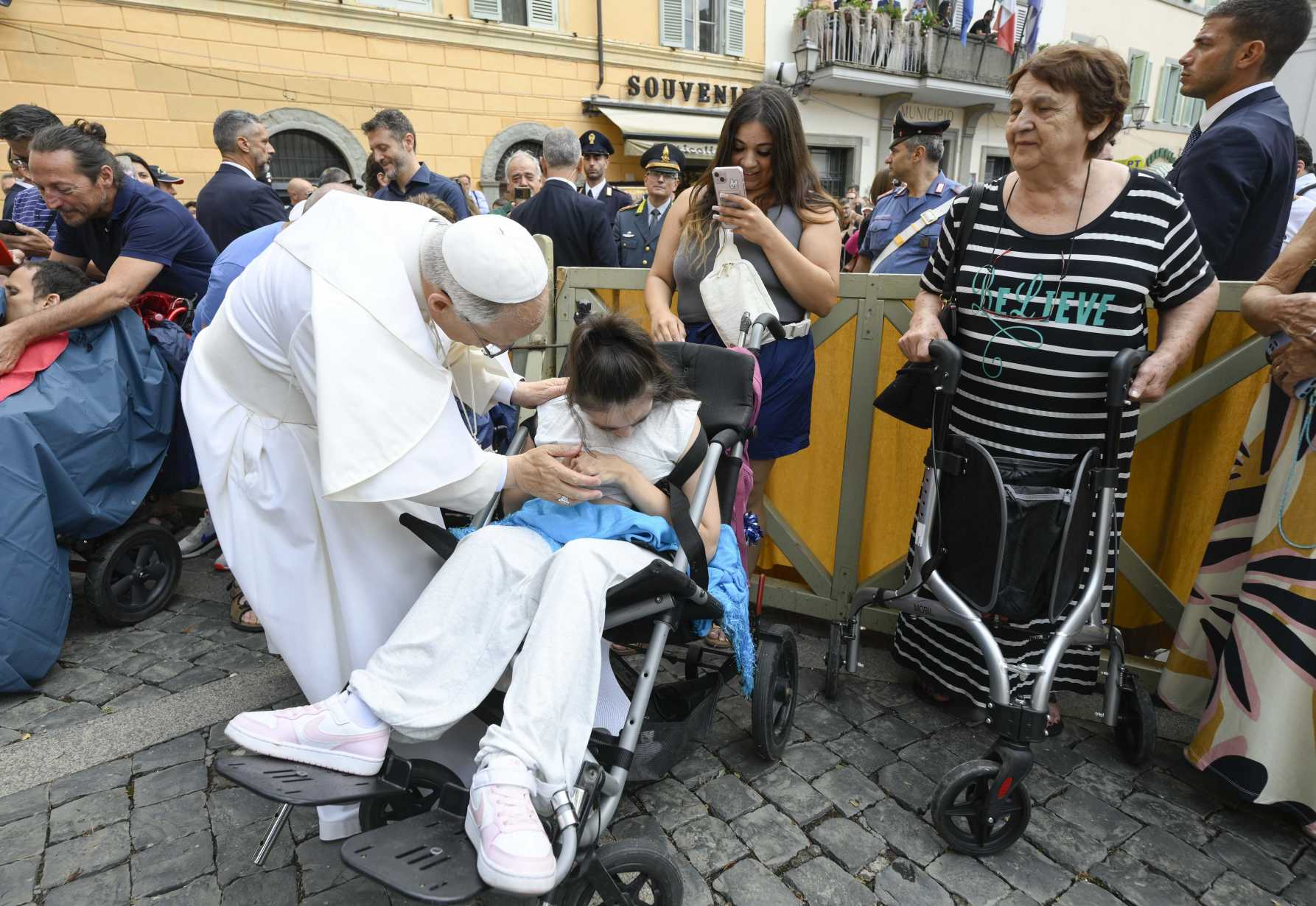
Pope Leo XIV greets a young woman in a wheelchair after leading the recitation of the Angelus prayer in front of the papal palace in Castel Gandolfo, Italy, Aug. 17, 2025. (CNS photo/Vatican Media)
VATICAN CITY (CNS) -- People of faith and goodwill need to take time to acknowledge the needs and suffering of those around them and be moved by love and compassion to offer others concrete help, Pope Leo XIV said.
To love one's neighbor -- whom Jesus identifies as anyone who has need of us -- is within everyone's reach, he said in his message for the 34th World Day of the Sick, observed by the church Feb. 11, the feast of Our Lady of Lourdes.
"The pain that moves us to compassion is not the pain of a stranger; it is the pain of a member of our own body, to whom Christ, our head, commands us attend, for the good of all," the pope wrote in the message released Jan. 20.
The theme chosen for the 2026 observance is inspired by the parable of the good Samaritan and Pope Francis' encyclical on human fraternity, "Fratelli Tutti."
Titled, "The compassion of the Samaritan: Loving by bearing the pain of the other," the message focuses on the importance of: encountering and listening to others; being moved by compassion; and loving God through concrete action in solidarity with others.
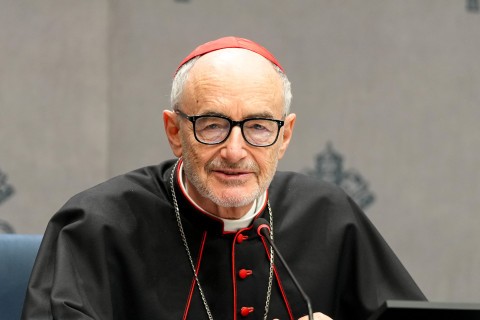
While traditionally addressed to Catholic health care and pastoral workers, this year's message is offered to everyone, Cardinal Michael Czerny, prefect of the Dicastery for Promoting Integral Human Development, said at a Vatican news conference to present the message Jan. 20.
The message is offered to everyone because "we're one body, one humanity of brothers and sisters, and when someone's sick and suffering, all the other categories -- which tend to divide -- fade away into insignificance," the cardinal said.
Asked to comment about how people in the United States should best respond when witnessing violence toward immigrants, Cardinal Czerny said, "I don't know what to say about the larger picture," but he said it would be helpful to focus on "the underview" or what should or is happening on the ground.
"There are many situations in which the individual Christian, the individual citizen, can extend their hand or lend their support. And that's extremely important," he said. "I suppose we could all hope that those many gestures, many Samaritan gestures, can also translate into better politics."
The Catholic "struggle for justice," he told Catholic News Service, gets "its real depth and its real meaning" from daily lived experience helping real people.
Advocacy work, for example, should "evolve out of real experience," he said. "When, let's say, your visits to the sick reveal, for example, the injustice of inaccessibility to health care, well then you take it up as an issue, but on the basis of your lived -- and indeed pastoral and Christian -- experience."
The good Samaritan shows that "we are all in a position to respond" to anyone in need, he said. "And the mystery, which you can discover whether you are a Christian or not, is that by responding, in a sense, your own suffering is also addressed."
"Since the major suffering for so many today, young and not so young, is loneliness and hopelessness, by worrying about it less and reaching out to someone who needs you, you will discover that there's more life than you imagined," he added.
In his message, Pope Leo said, "To serve one’s neighbor is to love God through deeds."
In fact, the "true meaning of loving ourselves," he wrote, involves "setting aside any attempt to base our self-esteem or sense of dignity on worldly stereotypes -- such as success, career, status or family background -- and recovering our proper place before God and neighbor."
"I genuinely hope that our Christian lifestyle will always reflect this fraternal, 'Samaritan' spirit -- one that is welcoming, courageous, committed and supportive, rooted in our union with God and our faith in Jesus Christ," Pope Leo wrote.
"Enkindled by this divine love, we will surely be able to give of ourselves for the good of all who suffer, especially our brothers and sisters who are sick, elderly or afflicted," he wrote.