Faith and flowers: Special rules keep God's house simply beautiful
There are many traditions observed during the season of Lent, and one of the more visible is the stark change in church decor and a complete absence of flowers.
However, fruit and berries are acceptable adornments all year, and the cherry is particularly suitable for Lent because, as St. Augustine noted, its red pulp is a powerful symbol of Christ's passion and the pit recalls the wood of his cross.

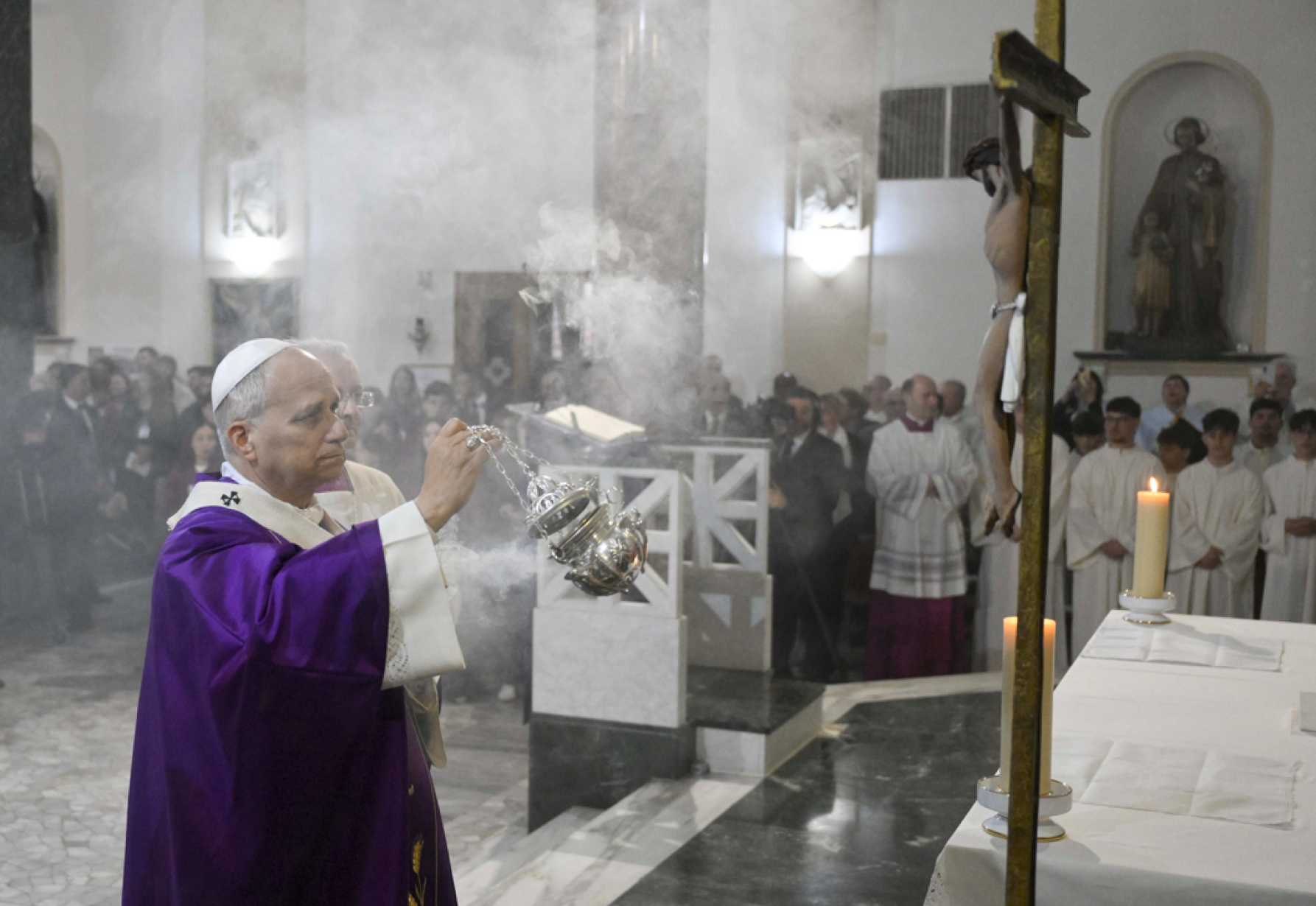
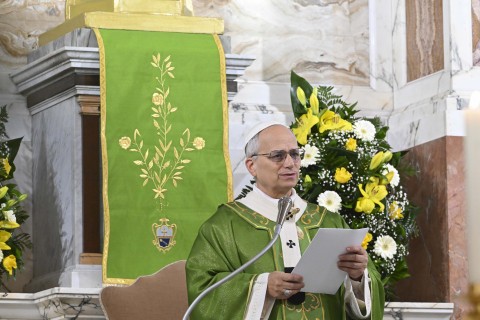
Pope Leo XIV celebrates Mass in the Church of the Ascension of Our Lord Jesus Christ in Rome March 1, 2026, during Lent. (CNS photo/Vatican Media)
VATICAN CITY (CNS) -- Of the many traditions and penitential practices observed during the season of Lent, one of the more visible is the stark change in church decor and a complete absence of flowers.
That shift was markedly noticeable during Pope Leo XIV's series of pastoral visits to different parishes in Rome.
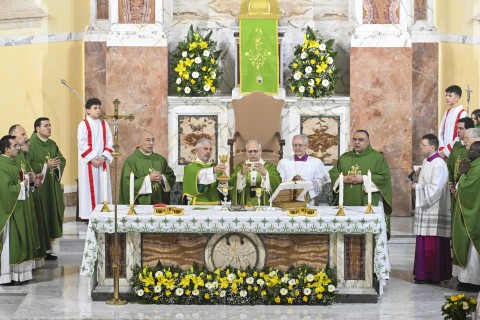
He started the weekly Sunday visits Feb. 15, before Lent, and the areas around the altar in the Church of Santa Maria Regina Pacis in Ostia Lido were resplendent with bright yellow and white blooms and lush greenery.
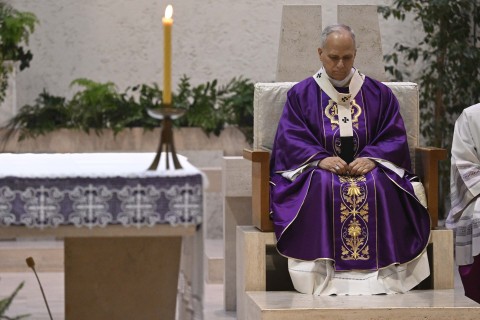
Then, after Ash Wednesday Feb. 18, each church visit has featured an altar and surroundings to be somberly bare of all floral decorations.
"Using flowers is absolutely forbidden" during the season of Lent, according to Micaela Soranzo, a professor and expert in liturgy and religious architecture.
However, this doesn't mean the church should be devoid of greenery, as small plants or simple compositions made up of leaves and branches are permissible, Sorano told Catholic News Service in an interview in 2019. She has since published a book on the subject, "Il giardino del cielo. Arredo floreale e liturgia," (The Garden of Heaven: Floral decoration and the liturgy.)
Even fruit and berries are acceptable adornments all year, and the cherry is particularly suitable for Lent because, as St. Augustine noted, its red pulp is a powerful symbol of Christ's passion and the pit recalls the wood of his cross, said Soranzo, who has also worked for the liturgy office of the Italian bishops' conference for two decades.
A modest display of flowers during Lent is possible on "Laetare" (Rejoice) Sunday, the fourth Sunday in the season, when the liturgical vestments change from purple to rose. This sudden visual variation is meant to strike the faithful that something new and joyful is approaching as Easter draws near, she had told CNS.
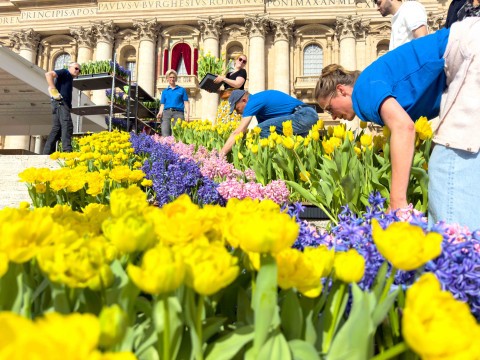
On Easter day, there is a true "explosion of flowers," representing new life and "light," which means the predominant colors should be yellow and white, she said. All the other colored blossoms and plants are there "to give the idea of a garden, the garden of the Resurrection," she said.
For the Catholic Church, those sprigs, sprays and bouquets adorning church interiors are meant to bring deeper meaning and attention to the liturgy and the key elements inside each place of worship, Soranzo said.
"The liturgy needs the language of flowers" because they complement "the immobility of the architecture" and church furnishings with their ability to appropriately represent different feast days and the changing cycle of seasons both in nature and the liturgy, she said.
"Flowers are meant to be an integral part of the liturgy," Soranzo said, "not filler."
In fact, when the true purpose of floral arrangements is misunderstood, churches run the risk either of being bereft of any gift of nature presented in homage to Christ or of being turned into a greenhouse "obstacle course" with pots and plants placed in every available space, she said.
The topic is so important that the General Instruction of the Roman Missal and bishops' conference guidelines include norms on the appropriate use of floral decoration, said Soranzo.
Like all adornments, flowers and plants must not ignore or detract from the symbolic and theological meaning of sacred spaces and furnishings, and they should highlight -- not hide -- the altar, the ambo and the baptismal font, said Soranzo.
The altar -- the table of the Lord -- is Christ; the ambo -- from where the word of God is proclaimed -- is the visible image of Christ resurrected; and the baptismal font is where God's children are welcomed into the Church, she said.
The need to focus on Christ and his sacrifice means only those elements necessary for the eucharistic celebration should be on the altar, she said, which means flowers should be placed near or next to the altar, never on top -- unless the altar is so large that a small arrangement would not be in the way.
Potted plants with roots should never be used near the altar -- only cut flowers to represent life "that is sacrificed," like the sacrifice of the Eucharist, she said. That is also why no artificial flowers or fake candles should ever be used, she said, because objects near the altar must always be things that "are consumed," depleted and fade away.
The use of flowers also should reflect the hierarchy of what is most important in the church, she said; for example, "it is not right if there are more flowers adorning the statue of the patron saint than the altar."
Soranzo said that a frequent concern of sacristans and parish workers in Italy is the high cost of floral decorations.
She said she tells them, "We must recognize that nature offers us so much," not just the usual hothouse flowers and expensive imports.
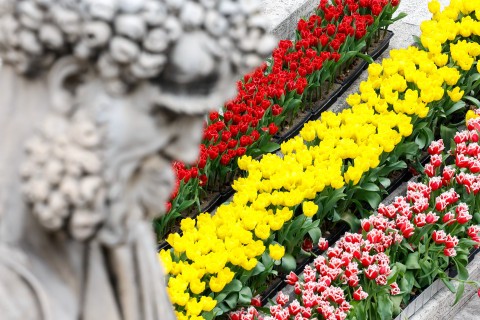
"Creation is so beautiful and wide. The Lord really gave us a lot," she said.
Parishes can keep their costs down by working with florists or farmers and using what is available in their community, said Soranzo. Sometimes the greater the challenge -- be it low budgets, high snowdrifts or long droughts -- the more room for creativity.
"Often simplicity is what makes a composition more beautiful," she said.
The aim, she said, is to create a space where a person of faith or a visitor walks into church and says, "'How beautiful it is to be here.' It has to feel welcoming and flowers help do that."