Good Friday liturgy underscores need to break 'this chain' of violence
At the Good Friday liturgy in St. Peter's Basilica, the homily framed Christ’s Passion as a radical answer to violence, presenting love and restraint as the only way to interrupt its cycle.

VATICAN CITY (CNS) -- A message of nonviolence and quiet endurance marked the Good Friday liturgy at the Vatican, during which the Passion of Christ offers an example of breaking the cycle of violence that continues today.
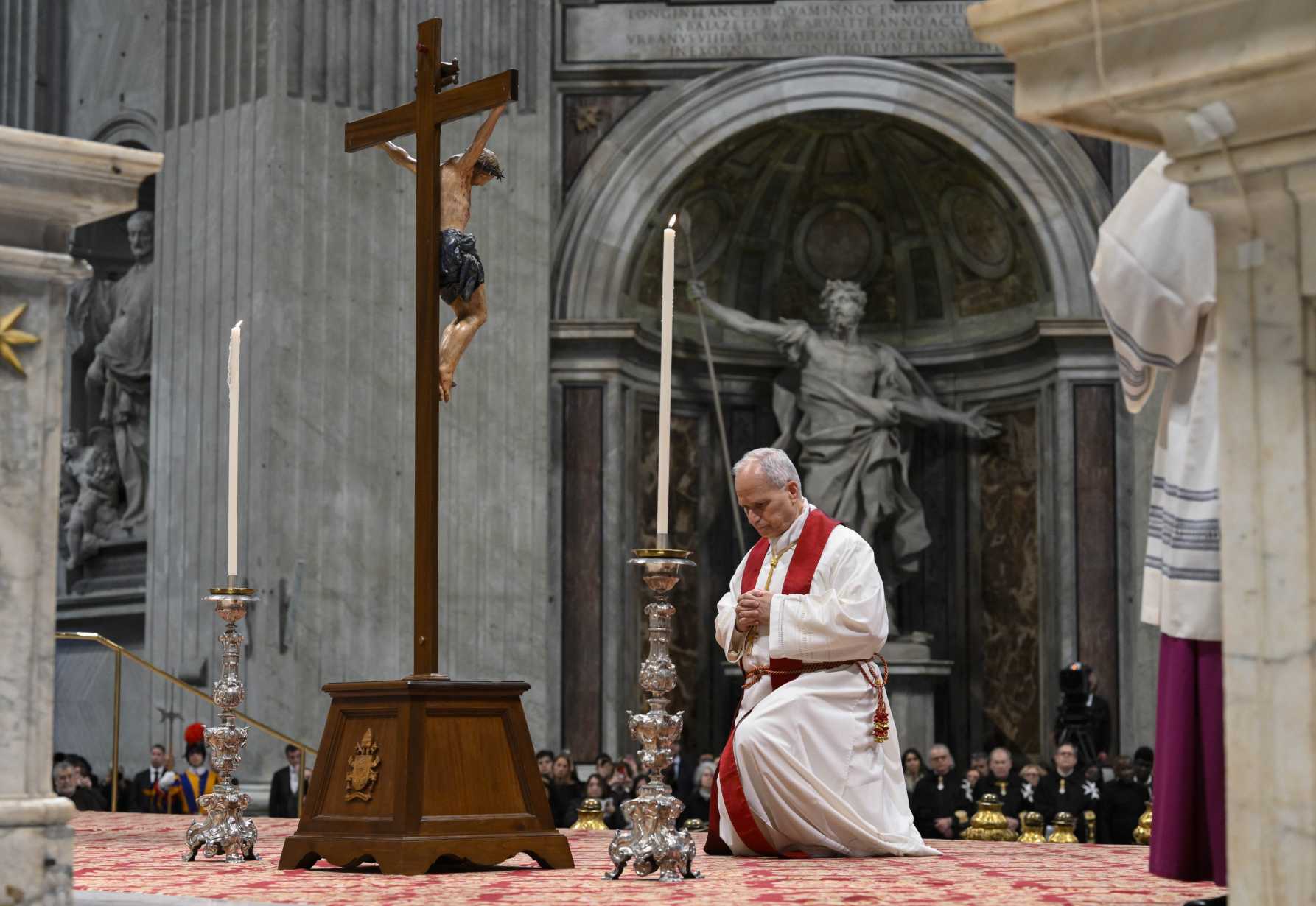
Delivering the homily during the solemn Liturgy of the Lord’s Passion ahead of the evening Via Crucis, Capuchin Father Roberto Pasolini, the preacher of the papal household, urged the faithful not to give in to violence, but rather find the "discreet and stubborn song that invites (us) to love."
"We are all constantly tempted to use a little bit of aggressiveness, a little bit of violence, thinking that without these means things will never be resolved," he said April 3 in St. Peter's Basilica. "The servant of the Lord cannot give in to this instinct."
The rite began with Pope Leo XIV's silent procession down the central nave. Dressed in red vestments, symbolizing the blood of Christ’s Passion, he somberly lay prostrate before the altar, a sign of adoration and penance. The readings recounted Christ's passion and death on the cross.
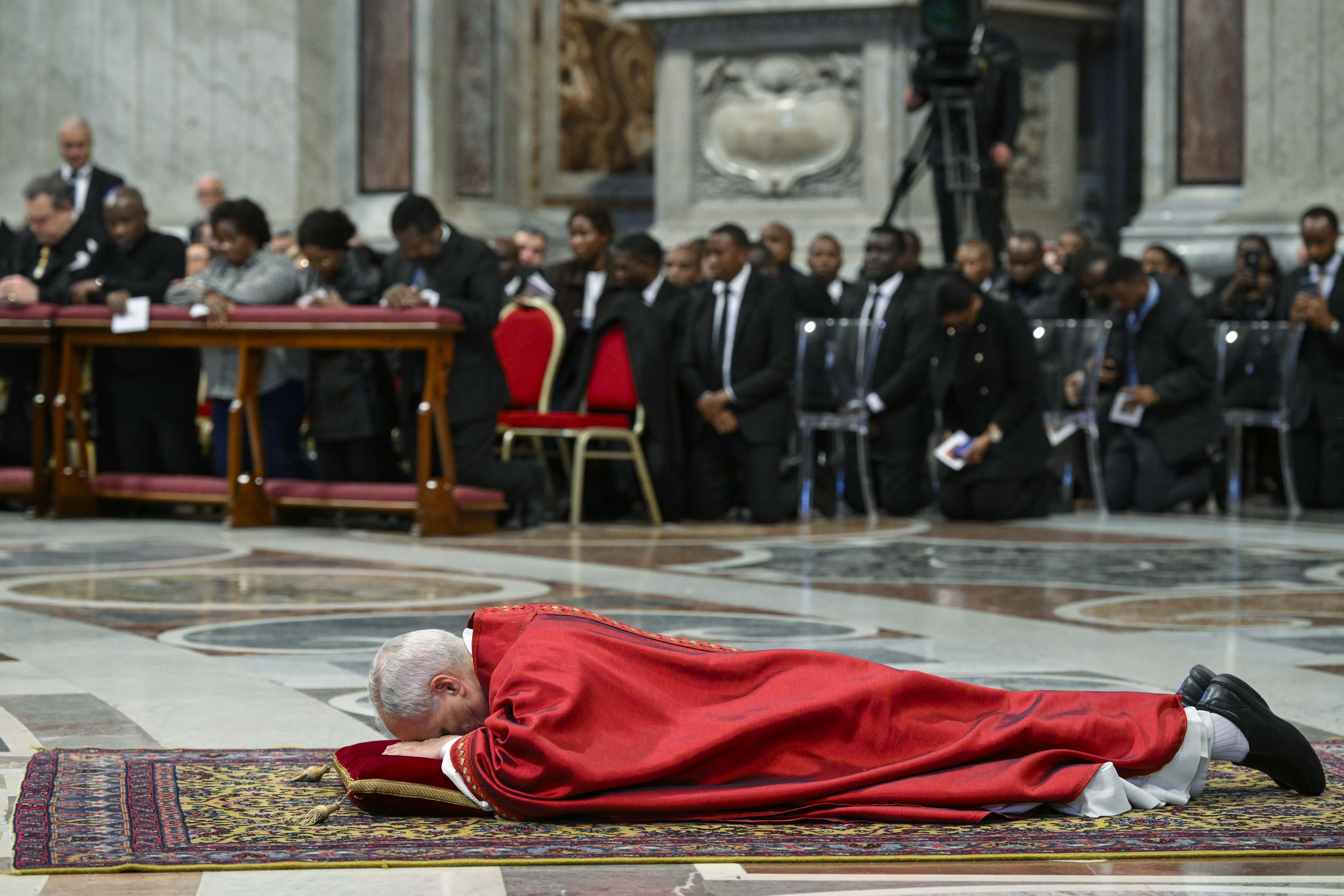
At the moment of the veneration of the cross, the pope removed his chasuble and shoes and knelt before the crucifix in a gesture of humility. Clergy followed one by one, venerating the crucifix on bended knee and with a kiss.
Father Pasolini’s homily echoed Pope Leo's repeated calls for an end to war, warning that "in a time like ours, still so lacerated by hatred and violence, where even the name of God is invoked to justify wars and decisions of death…."
He said this evil continues "to circulate because it always finds someone willing to return it and multiply it."
The homily emphasized that resisting this evil of violence is neither easy nor instinctive. Faced with injustice, the natural human reaction is to retaliate or "even the scores." Yet Jesus refused that instinct entirely.
"He accepts everything without returning violence," Father Pasolini said.
Jesus "broke this chain," not through superior force, but by embracing suffering and responding with forgiveness, silence and compassion, the papal preacher said.
Father Pasolini pointed to what he called a "silent line of people," ordinary men and women who, often unnoticed, choose to resist hatred in their daily lives.
"They get up every day and try to make their life something that is not only for them, but also for others," he said. "They carry burdens that they have not chosen, they receive wounds without becoming bitter, they don't stop looking for the good, even when it seems useless."