Pope blesses lambs during annual tradition on feast of St. Agnes
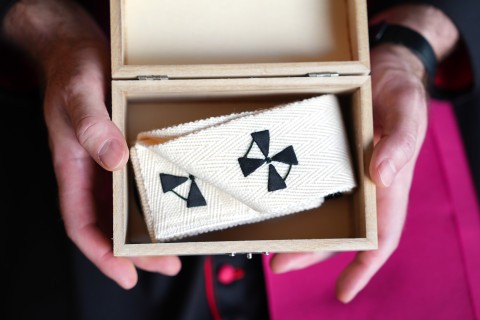
The lambs' wool will be used to make palliums -- a woolen band worn by archbishops to symbolize their authority and unity with the pope.
Lamb's wool is used to symbolize Christ, the Lamb of God and the Good Shepherd. And because the pallium is worn around the neck, it also underlines the archbishop's own role as a shepherd carrying his sheep.
 Carol Glatz
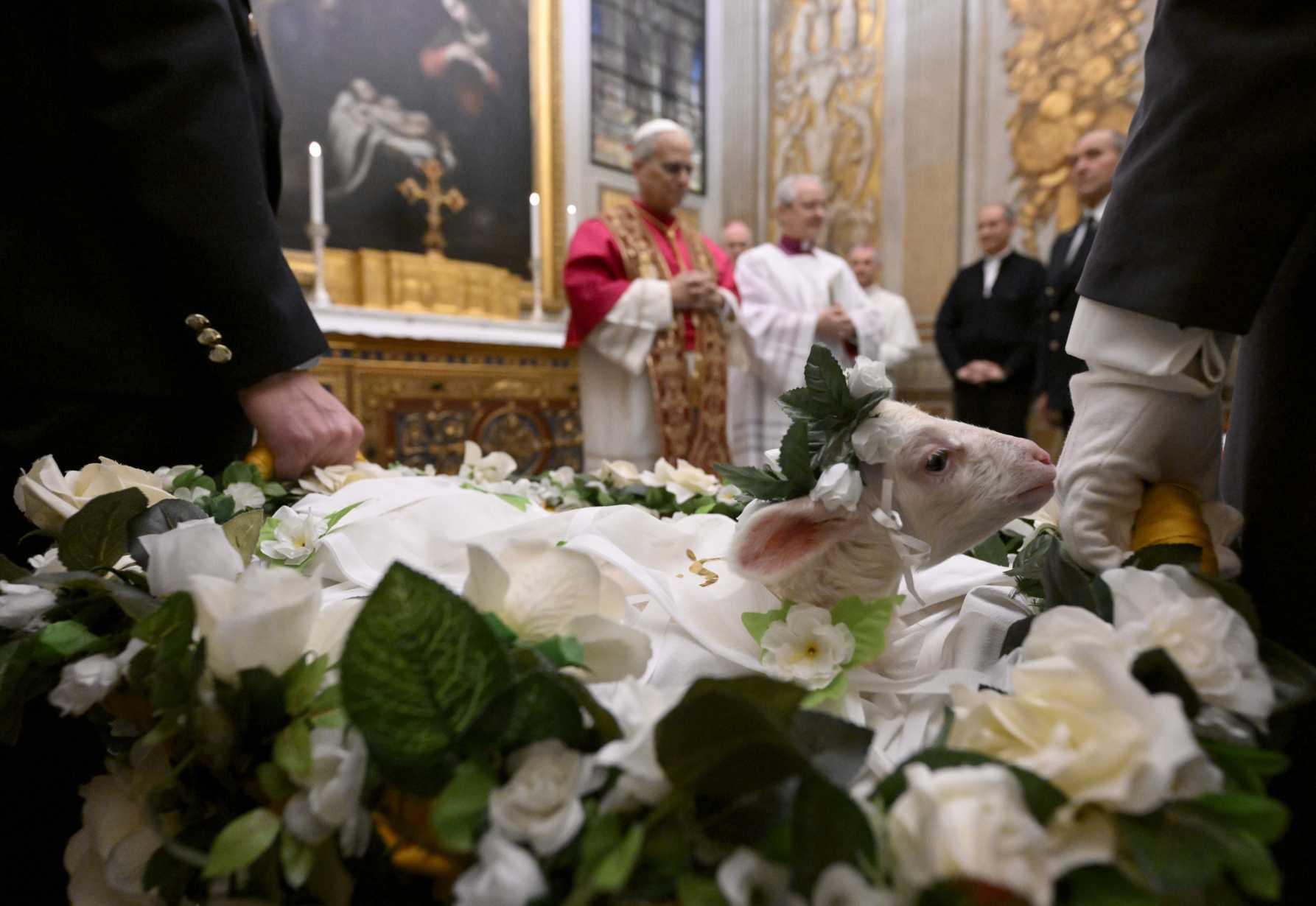
Pope Leo XIV blesses two lambs in the Urban VIII Chapel at the Vatican Jan. 21, 2026, the feast of St. Agnes. (CNS photo/Vatican Media)
VATICAN CITY (CNS) -- Pope Leo XIV blessed two lambs in the Urban VIII Chapel at the Vatican Jan. 21, the feast of St. Agnes, a Roman martyr who is often depicted with a lamb. Agnes also is a derivative of the Latin word for lamb, "agnus."
The lambs are raised by Trappist monks outside Rome, and they are bound and placed in baskets to prevent them from running away during the blessing. They are decorated with red and white flowers and blessed in a formal ceremony at the Basilica of St. Agnes and by the pope at the Vatican.
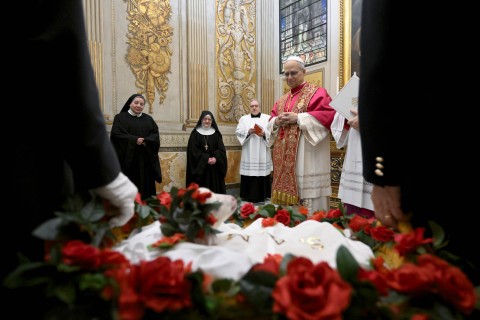
Benedictine nuns at the Monastery of St. Cecilia in Rome will use wool from the lambs to make the pallium worn by archbishops; the pallium is a symbol of the archbishop's authority and unity with the papacy.
In fact, the woolen bands, which are worn around the neck, have long strips hanging down the front and the back, and are tipped with black silk to recall the dark hoof of the sheep the archbishop is symbolically carrying over his shoulders. Lamb's wool is also used to symbolize Christ, the Lamb of God and the Good Shepherd.
The woolen palliums are kept by St. Peter's tomb right before the pope blesses and distributes them to new archbishops during a special liturgy in Rome on June 29, the feast of Sts. Peter and Paul.
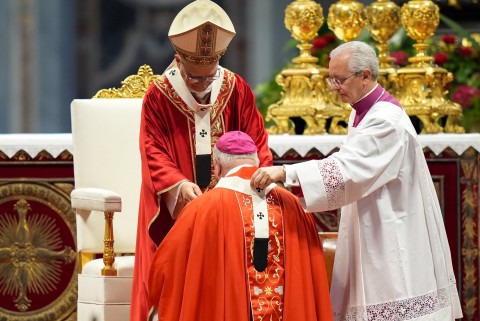
By personally placing the palliums on the archbishops, the pope underlines their bond of unity and communion with the successor of Peter.
Members of the cloistered Benedictine community at Rome's Basilica of St. Cecilia have been entrusted for more than a century with preparing the palliums.
The nuns once produced the palliums from scratch, hand-weaving pure-white lambs' wool into bands that they would then sew together and decorate. But then, the nuns started commissioning a textile company outside of Rome to supply the unfinished wool strips.
The June 29 Vatican Mass is the only time archbishops wear the palliums together. Once bestowed, liturgical rules require that the pallium be worn only in the metropolitan's own see, and then only during important liturgical occasions like ordinations.
Because of the cloth's territorial character, an archbishop who is transferred to another metropolitan see receives a second pallium.
Under current church practice, if a newly named archbishop cannot travel to the Vatican to receive his pallium from the pope, it is given to him by a papal representative in his country.