Pope Leo steers discourse back to Africa trip after White House criticisms cloud initial days
Speaking only on his ongoing papal trip to journalists, Pope Leo XIV is drawing international attention he has received this week away from U.S. politics.
 Josephine Peterson
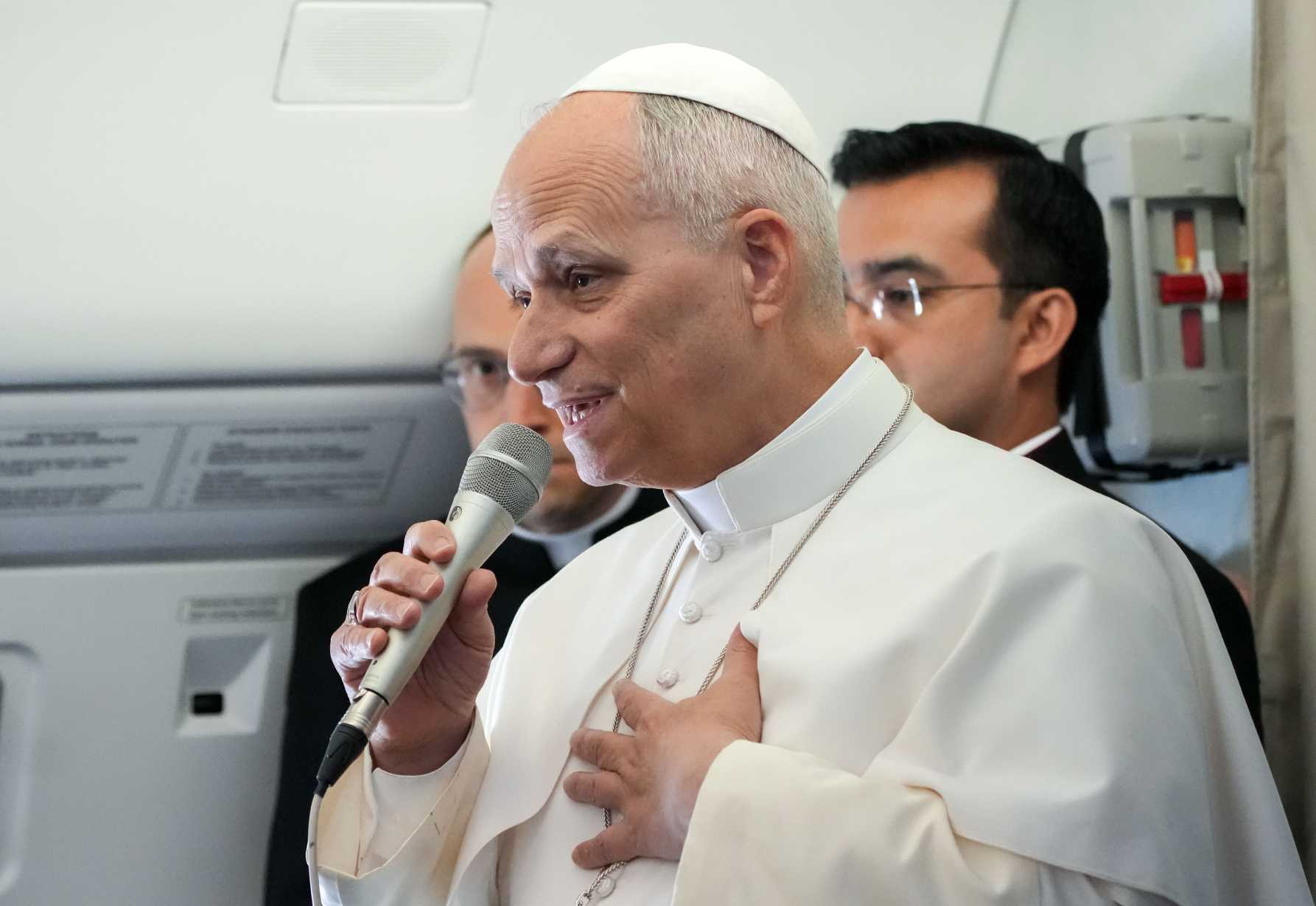
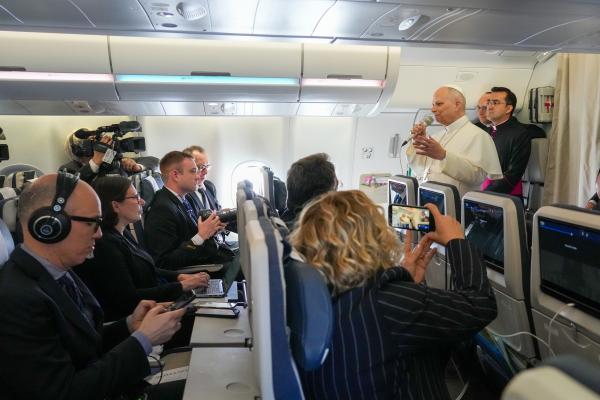
Pope Leo XIV speaks to reporters aboard the papal flight from Algeria to Cameroon April 15, 2026, reflecting on the teachings of St. Augustine during his apostolic journey across Africa.
ABOARD THE PAPAL FLIGHT FROM ALGERIA TO CAMEROON (CNS) -- Following three days of public attacks from U.S. President Donald Trump and his administration, Pope Leo XIV did not take questions from reporters in an in-flight press address, redirecting attention, instead, to his international trip across Africa and his spiritual father, St. Augustine.
Heading to the second country of his trip, Cameroon, the pope told journalists in a greeting of less than three and a half minutes that he was grateful for the warm welcome by officials, the people and the “very small, but very significant presence of the Catholic Church” of Algeria. However, he spent much of his address talking about the value of the teachings of this 4th-century saint today.
“It was a special honor for me to return to Annaba yesterday also to offer the Church and the world the vision that St. Augustine offers us in terms of that search for God and the struggle to build community, to seek for unity among all people, and respect for all peoples in spite of the differences,” he said April 15 on the papal plane.
Highlighting his stop at the Great Mosque of Algiers, he also reiterated the value of peace.
“I think the visit to the mosque was significant and to say that although we have different beliefs, we have different ways of worshipping, we have different ways of living, we can live together in peace,” he said. “I think that to promote that kind of image is something which the world needs today and that together we can continue to offer and witness as we continue in this apostolic voyage.”
The pope began his longest international trip thus far April 13 in Algeria, during which time U.S. President Donald Trump called Pope Leo “wrong” on geopolitical issues. When Pope Leo greeted reporters on the papal flight from Rome to Algeria, he addressed the president’s remarks, saying he was not a politician, did not want to enter into a debate with the U.S. president, and would continue to speak out against war.
Thus far, the White House has only doubled down on its condemnations of the pope’s calls for peace, particularly in the Middle East.
Vice President JD Vance, a Catholic, joined in, backing the president in two media appearances April 14, saying to Fox News, “it would be best for the Vatican to stick to matters of morality, to stick to matters of what’s going on in the Catholic Church.”
“And let the President of the United States stick to dictating American public policy,” Vance said in the interview.
At a Georgia college campus tour organized by conservative media group Turning Point April 14, Vance pushed back on Pope Leo’s Palm Sunday homily that God does not hear the prayers of those who make war, questioning if God was on the side of Allied forces in World War II, liberating Jewish survivors from concentration camps.
When asked if he would apologize to the pope following Pope Leo’s comments on the papal flight, Trump replied, “No, I don’t because Pope Leo said things that are wrong.”
Meanwhile, Pope Leo said that even though St. Augustine lived 1600 years ago, his words "have great relevance today." Speaking to Cameroon's President Paul Biya and the diplomatic corps at the presidential palace April 15, the pope said the saint believed those who rule should do so to serve the people, and they should rule "not from a love of power, but from a sense of the duty they owe others."
"From this perspective, serving one’s country means dedicating oneself, with a clear mind and an upright conscience, to the common good of all people in the nation," he said in his first stop in Cameroon, whose president has led the country since 1982.
He went further to state that religious traditions can help "inspire prophets of peace, justice, forgiveness and solidarity." When religious leaders are involved in mediation and reconciliation, then politics and diplomacy "can draw upon moral forces capable of easing tensions, preventing extremism and promoting a culture of mutual esteem and respect."