Skiing came to Central Europe thanks to an adventurous priest, Catholic newspaper says
An Italian priest from the 1600s is credited with bringing skiing from remote Scandinavia to other parts of Europe.
Father Francesco Negri was a natural history and geography buff, and he had many helpful hints for successful skiing, including to always keep the skis parallel and to fuel up on generous portions of distilled liquor in order to burn through the deep, cold drifts.
 Carol Glatz
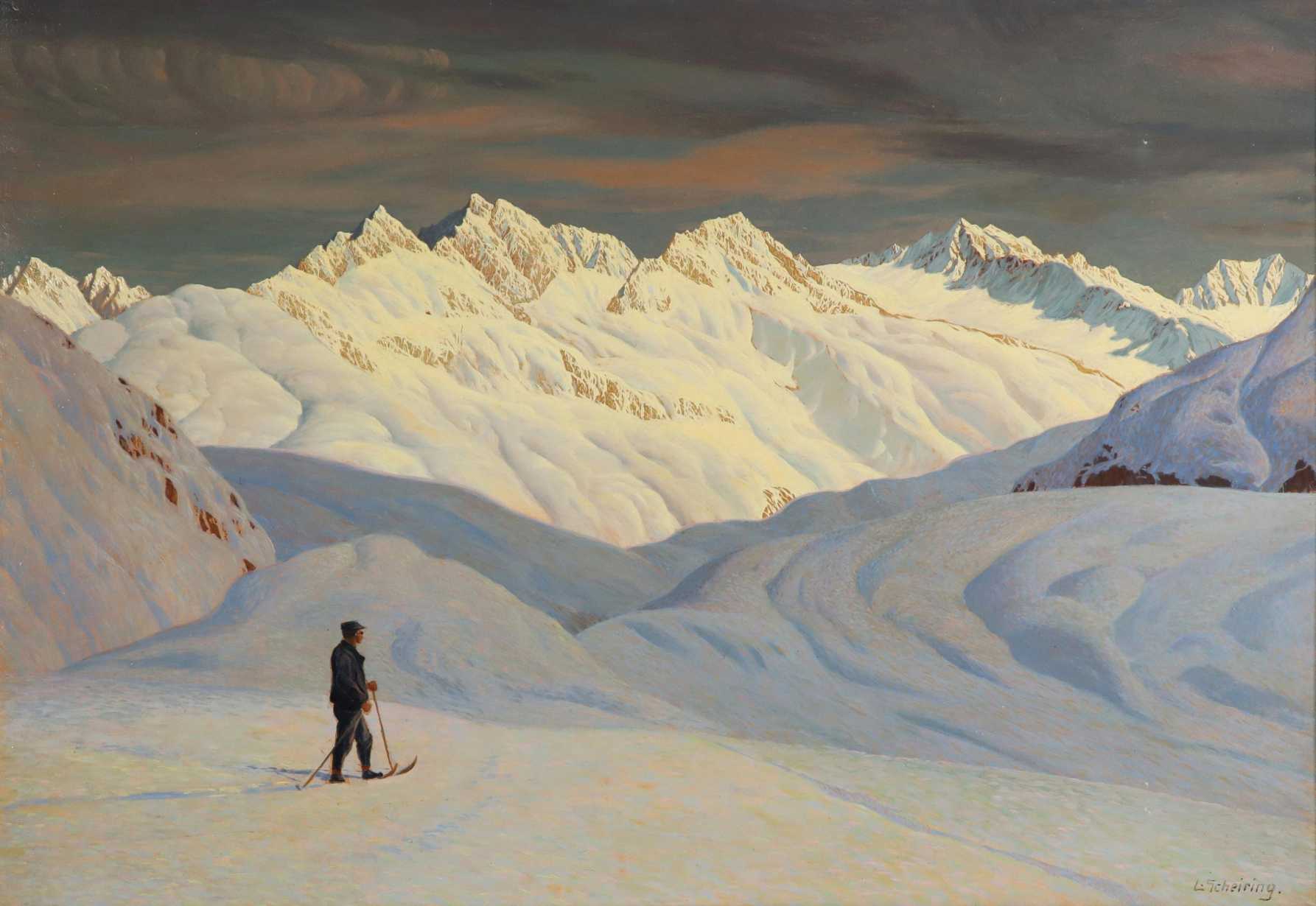
An undated photograph of the painting titled, "Schiwanderer in abendlicher Bergwelt," (Ski hiker in the mountains at dusk), by the Austrian painter, Leopold Scheiring, who lived from 1884 to 1927. (CNS photo/CC by 4.0, Wikimedia Commons)
ROME (CNS) -- Thanks to a 17th-century Italian priest, skis made their way from their origin in Scandinavia to Central Europe.
Father Francesco Negri, born in Ravenna, Italy, in 1623, was a natural history and geography buff and longed to discover the secrets of the North.
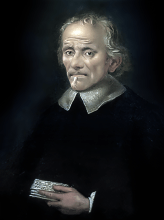
According to an article first published by the Italian Catholic newspaper Avvenire in 2006, Father Negri is thought to be the first tourist to travel to Norway's North Cape and the first Central European to don a pair of skis and spread this sleek, winter transport technology to Italy, host country to the Olympic Winter Games in Milano-Cortina Feb. 6-22.
During the Italian priest's 1663-66 voyage to the snow-covered lands of Sweden and Norway, he met with and wrote extensively about the Scandinavian peoples, according to the article.
In his book, "Viaggio Settentrionale," he marveled at how the native hunters darted toward their reindeer prey using "two thin boards no wider than the foot, but 8 to 9 palms long, with the tip turned up a bit so as not to dig in the snow."
He also made drawings and described how the skier used sticks that had a round piece of wood driven into one end, so the poles would not perforate the snow.
Not the passive observer, Father Negri also strapped the unfamiliar "skie" to his feet and experimented.
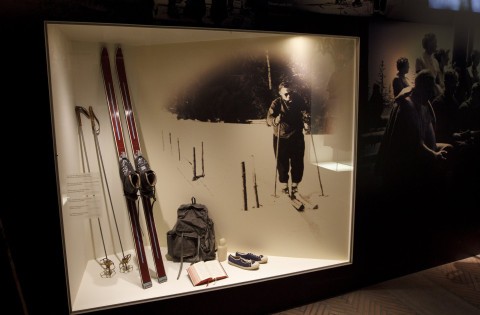
He noted that it was important to keep the skis straight and parallel. Possibly speaking from personal experience, he warned the user would fall if the skis spread too far apart or if the front tips or back ends crossed.
In his book, published posthumously in 1700, the Italian priest offered some other helpful hints for successful skiing.
It helps "to eat and drink abundantly," he wrote. He said it was best to fuel up on generous portions of distilled liquor, or "aquavit," early in the morning in order to burn through the deep, cold drifts.
Over the years, the pastime grew in popularity, becoming a more common hobby in middle-class society. Among the many Central Europeans who became avid skiers was St. John Paul II. Born in Poland in 1920, he loved the outdoors and would still go swimming, skiing and mountain climbing while he was bishop and cardinal of Krakow, Poland.
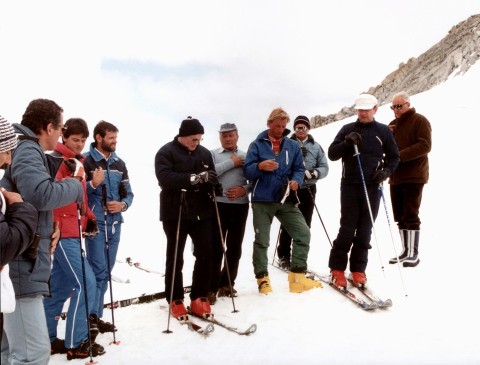
He did not let becoming pope in 1978 and moving to the Vatican stop him from his love for sport. St. John Paul regularly left the Vatican unannounced and, in his early years, he would spend an afternoon skiing or hiking.
According to Cardinal Stanislaw Dziwisz, the late pope's private secretary, St. John Paul made more than 100 secret trips to ski or hike in the Italian mountains, particularly the Gran Sasso mountain in Abruzzo.
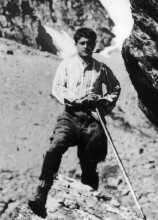
Another well-known saint-skier is St. Pier Giorgio Frassati, whom St. John Paul beatified in 1990, and Pope Leo XIV canonized Sept. 7, 2025.
Born in Turin, which hosted the Winter Olympics in 2006, St. Frassati loved the outdoors and was an avid mountain climber. An iconic image of the young man shows him on a mountain summit with a hiking stick and smoking a pipe, illustrating the motto he was best known for, "Verso l'alto" ("To the heights").