Visitor breath, sweat and climate change prompt work on Sistine Chapel masterpiece
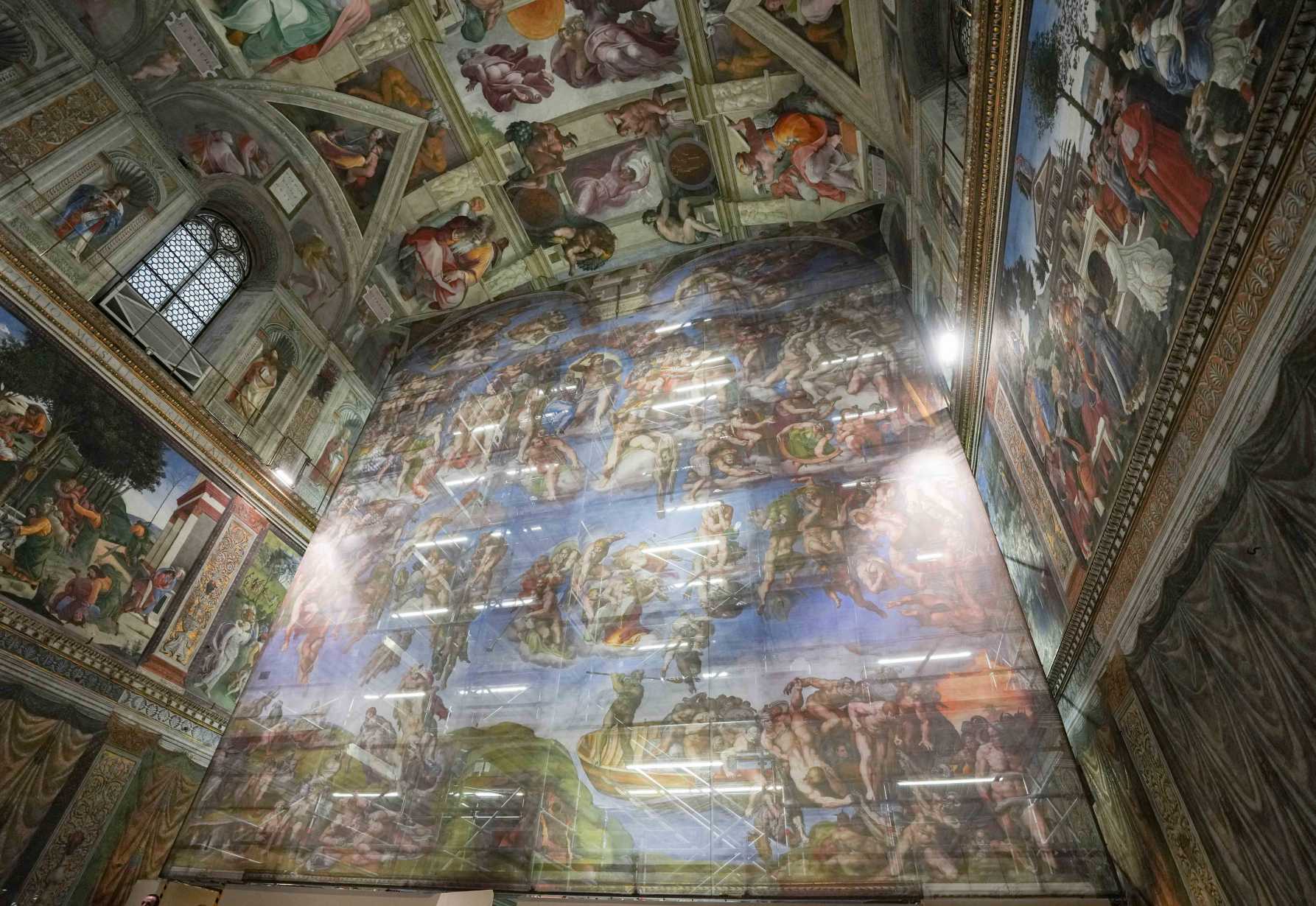
The Vatican Museums recently began maintenance work on the Sistine Chapel after a whitish film formed across some of the frescoes. The chapel is still open to visitors, but a large section of Michelangelo's Last Judgment is concealed behind scaffolding and a protective screen with a life-size image of the artwork.
 Josephine Peterson
VATICAN CITY (CNS) -- When millions of visitors flock to the Sistine Chapel each year, their seemingly invisible breath and sweat are slowly leaving a mark on this Renaissance masterpiece, according to Vatican Museums officials.
After 30 years since the chapel's last big renovation, the director of the Vatican Museums, Barbara Jatta, said the impact of five to six million visitors a year has created a white film over different surfaces in the chapel. The largest damage was found on Michelangelo's famous fresco of the Last Judgment.
She said the increased accumulation of residue from human sweat and breath on the artwork may be linked to climate change, as Italy has experienced warmer temperatures in recent years.
"Every day, we check the Sistine Chapel, but last year, we realized that there is a layer of salt," she told the press invited to the chapel Feb. 28. "It's something that probably is due to the presence of the people, even if we have a very sophisticated climate system" meant to mitigate their impact.
Spread across the entire back wall, greeting visitors as they walk into the chapel, Michelangelo's Last Judgment depicts the second coming of Christ at the moment before delivering his final verdict, surrounded by saints and angels as the blessed rise to heaven and the damned are dragged to hell.
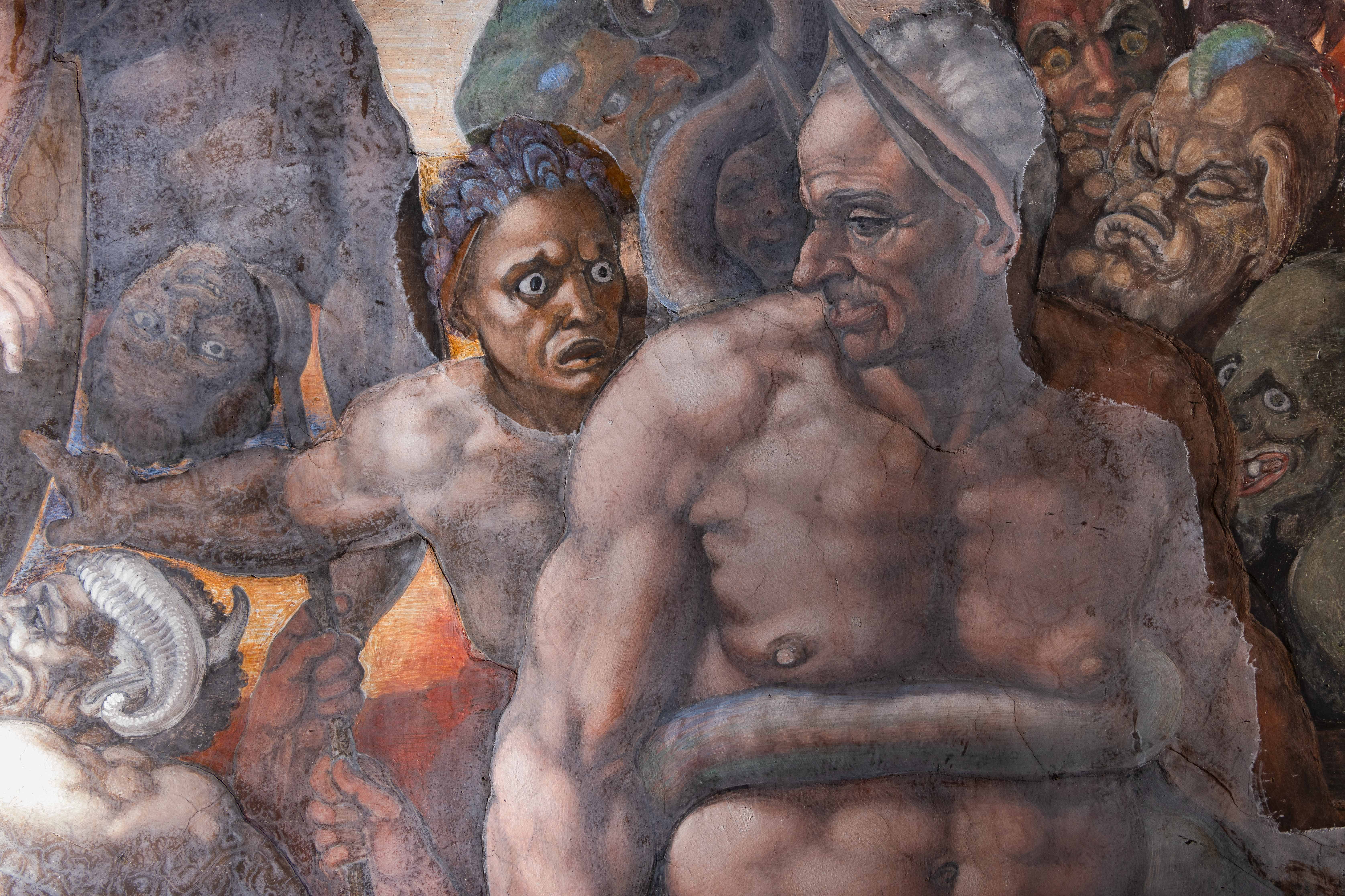
Jatta said the film is "nothing too serious" and the work is a simple maintenance project. Restorers have been gently brushing deionized water over layers of Japanese paper pressed against the fresco, preserving the underlying pigment while gradually removing the calcium lactate film.
Every January and February, the museum carries out minor patch repairs on the fresco surrounding the chapel, including removing the whitish film from certain sections, Jatta said. Most of the time, this maintenance can be done quickly with mobile scaffolding. During previous inspections, calcium lactate was found in smaller spots, including on the so-called "Quattrocento paintings." These paintings by several Florentine artists were commissioned by Pope Sixtus IV for two side walls.
This year, staff found the residue throughout the Last Judgment. Jatta said it was more effective to address the issue by setting up scaffolding rather than use multiple temporary setups. So Feb. 23, the Vatican Museums erected scaffolding concealed by a full-scale image of the Last Judgment fresco on a screen, allowing visitors to continue touring the Sistine Chapel as staff work to delicately remove the residue from the artwork and refresh the mural.
The scaffolding and screen are expected to remain in place until Holy Week, Jatta said.
In order to preserve the artwork, Jatta said they have already reduced the number of visitors allowed in the chapel at any one time and extended museum hours. Museum officials plan to add climate control to the upper and lower galleries by the end of 2026 to reduce the effects of visitors' perspiration and breath, she said.
The maintenance work is meant to ensure the vibrancy of Michelangelo's iconic work remains visible to tourists. Staff performed some cleanings last year, "and we realized that it's much better," Jatta told reporters.
"The colors and the incredible and magnificent fresco of Michelangelo will be back," she said.
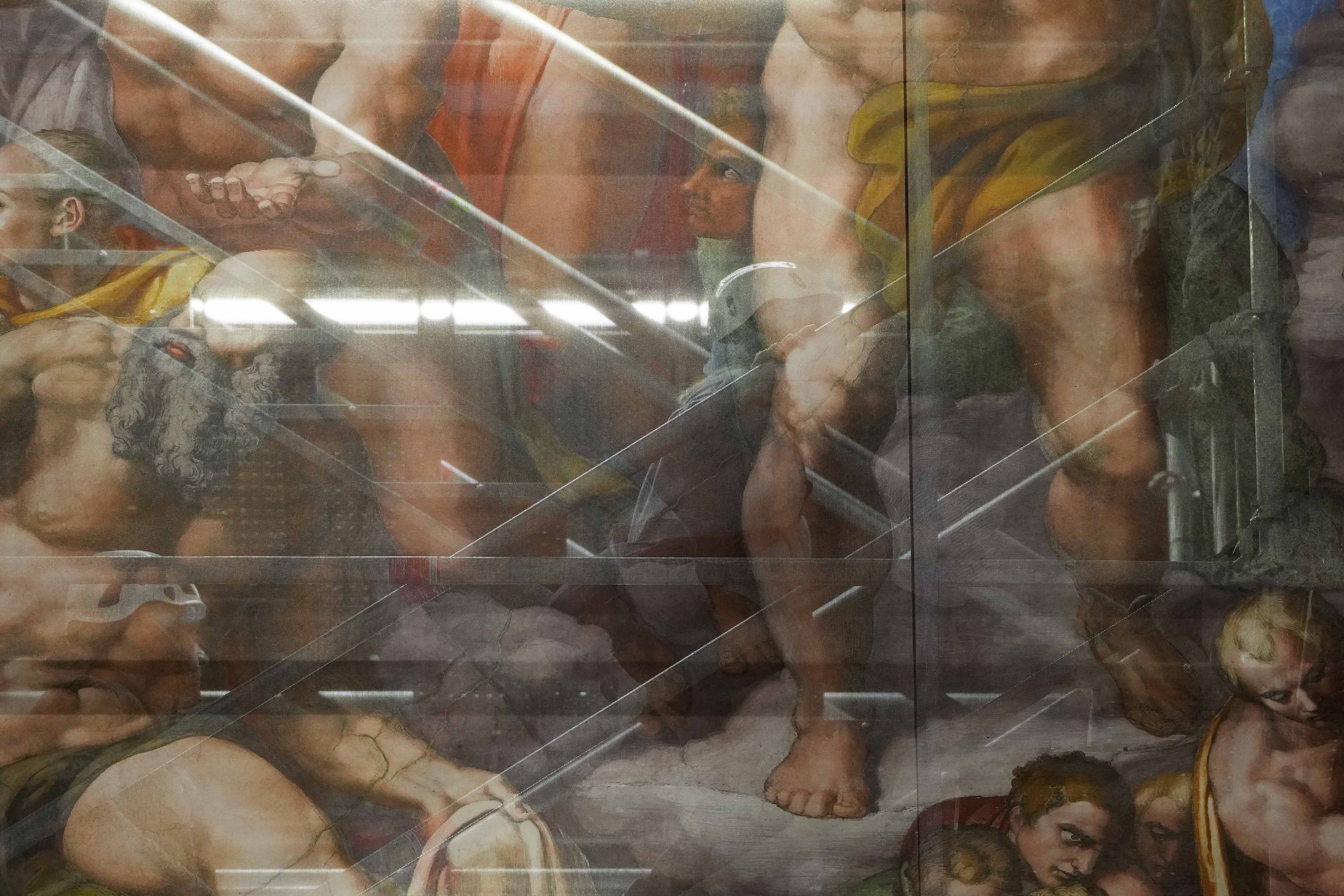
Completed between 1536 and 1541, the Last Judgment was essentially painted only by Michelangelo. Fabrizio Biferali, curator of the museums' department of 15th–16th century art, said the cleaning process has allowed them to uncover new technical details of his work.
Speaking with reporters on the scaffolding, Biferali pointed to visible revisions in the fresco, explaining how the artist adjusted his figures directly on the wall.
Biferali drew attention to what are called “pentimenti" or "changes of mind,” where Michelangelo repainted a figure after realizing “the foreshortening wasn’t perfectly effective from below.” Sometimes he even left areas of plain plaster exposed instead of adding a layer of pigment so that “the light plaster itself supplies the highlight.”
The most recent major restoration of the Last Judgment was completed in 1994, removing a layer of smoke and wax buildup, the Vatican Museums said in a press release.
The Florida Chapter of the Patrons of the Arts in the Vatican Museums covered restoration costs, and Jatta said the museums are very grateful for their support over the years.
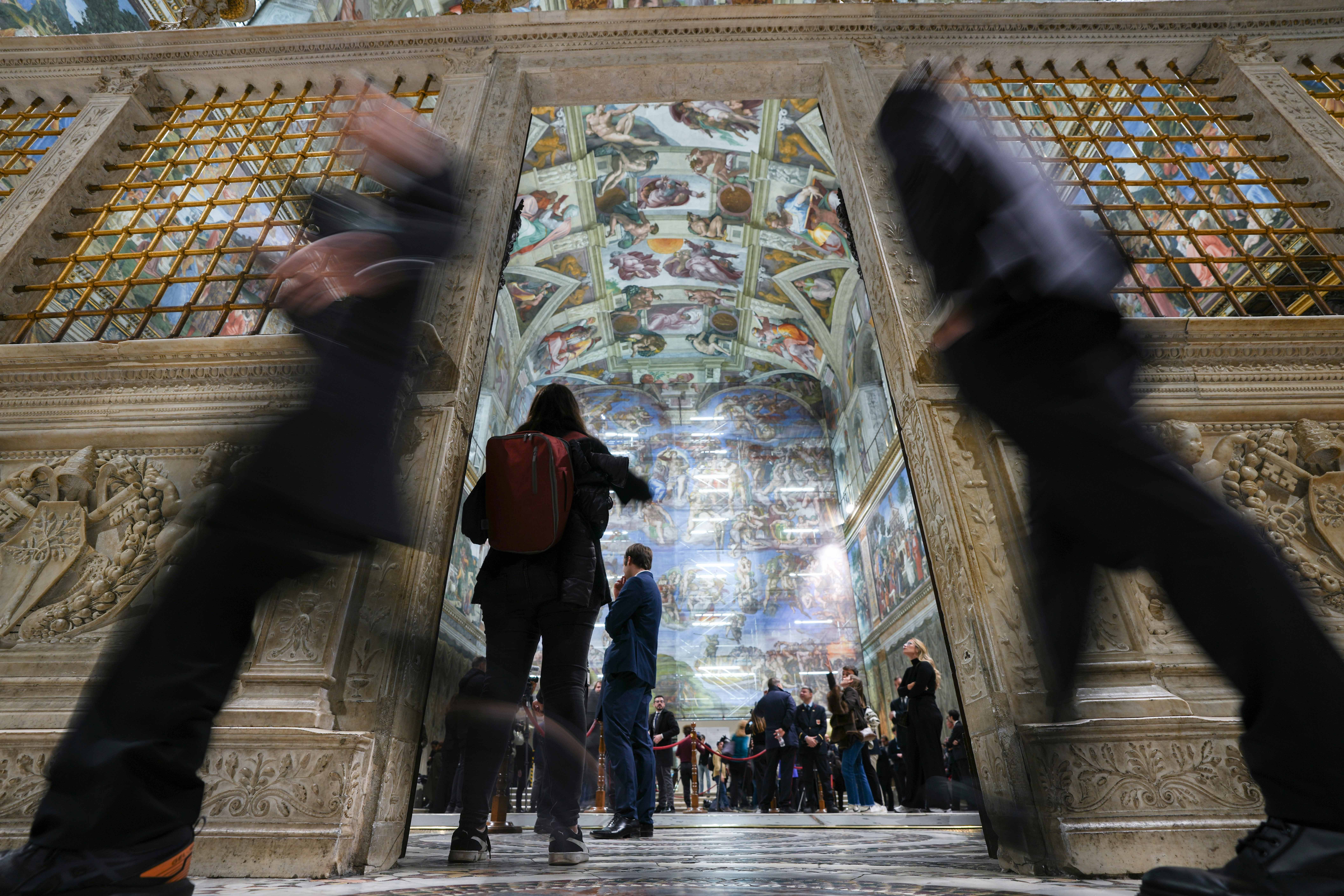
Timothy Lisenbe and Diane Lisenbe, a couple visiting from the Dallas-Fort Worth metroplex, said that while it's not the full experience to see Michelangelo's work during the maintenance project, the Sistine Chapel remains a sight to behold.
"I've been hearing about this since I was in grade school. Now I'm 64 years old, and it's still fresh on my mind what the teachers told us in school," he told Catholic News Service Feb. 28. "It's really something to see it in real life."
The Lisenbes said they understand that restorations are necessary. She said she also visited the Sistine Chapel during its first major modern-day restoration project and found it ironic that her second visit was again hampered by scaffolding.
"That means we will have to come back," she said to her husband.