The Second Vatican Council
Information and Resources on the Second Ecumenical Council of the Vatican (1962-1965)

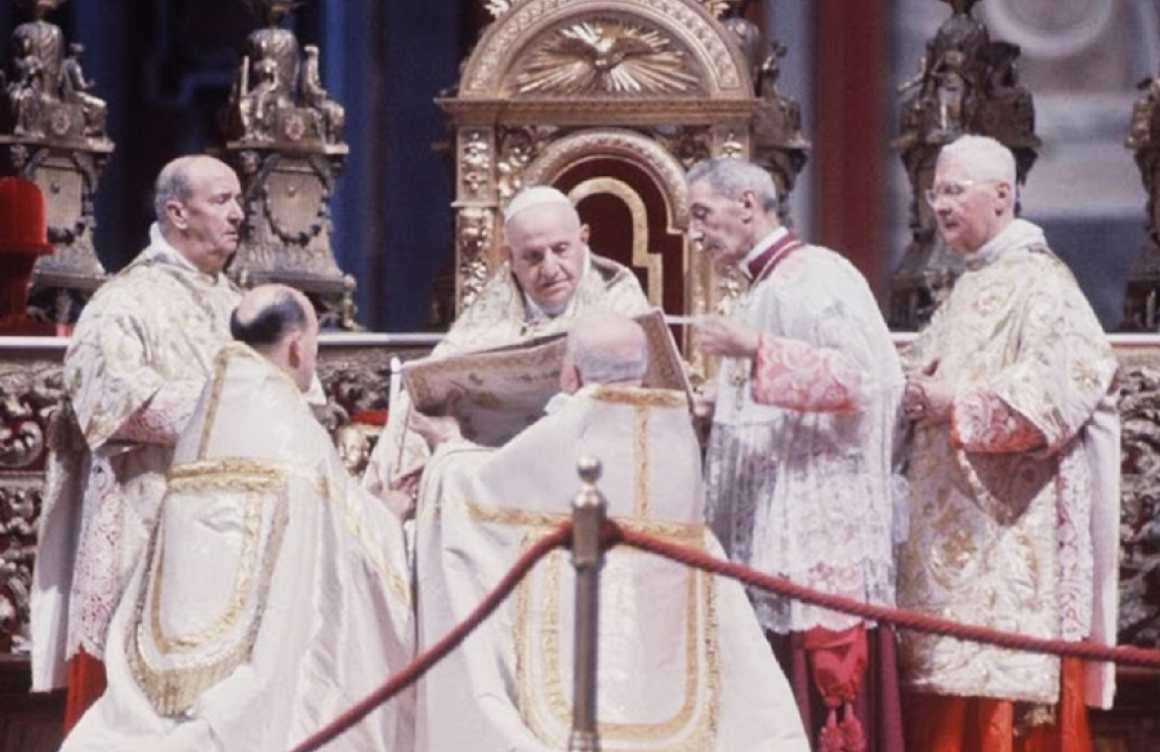
The Second Ecumenical Council of the Vatican, widely known as the Second Vatican Council or Vatican II, was the 21st and most recent ecumenical council of the Catholic Church. Pope John XXIII convened Vatican II in 1962 to complete the unfinished work of Vatican I and better connect the Church with the modern world. Around 3,000 people participated in Vatican II. Over four sessions of 8-12 weeks each, the Council produced 16 documents: four major constitutions, nine decrees, and three declarations which impacted every aspect of faith life.
The Second Vatican Council is considered one of the most impactful moments in the history of the Church. Below are resources for understanding Vatican II, as well as information on the documents it produced.
10 Ways Vatican II Shapes the Church Today
The Four Constitutions
The Second Vatican Council produced four major constitutions, which are the most important documents to emerge from the Council and profoundly impacted the life of the Church.
Sacrosanctum Concilium (1963)
The Constitution on the Sacred Liturgy (Sacrosanctum Concilium) calls for the renewal of the Church’s liturgical celebrations to better enable the faithful to participate fully, consciously, and actively (cf. nos. 21 and 25).
Impact: The implementation of Sacrosanctum Concilium in the liturgy led to the greater use of vernacular languages, the simplification of rites, and a renewed emphasis on the proclamation of the word through scripture and the homily. These changes redefined the liturgical experience for Catholics globally, making it more accessible and participatory.
Lumen Gentium (1964)
Lumen Gentium, “Light of Nations,” is the Dogmatic Constitution on the Church that presents the Church as a Mystery and a Communion of baptized believers (the “People of God”) who are called to holiness and who each have specific roles and responsibilities. It also confirms the collegiality of the Episcopate "with and under the successor of St. Peter".
Impact: Lumen Gentium stressed that all the baptized share in Christ's mission, leading to increased lay involvement in evangelization, social outreach, and even aspects of church governance. It strengthened the Church’s role in social justice, affirmed the Church’s missionary nature and emphasized the universal call to holiness.
Dei Verbum (1965)
Dei Verbum, “Word of God,” is the Dogmatic Constitution on Divine Revelation that addresses the theological foundations of how God reveals Himself, the role of Jesus Christ as the fullness of that revelation, and how the Church safeguards, interprets, and nourishes the faithful with God’s Word.
Impact: Dei Verbum shifted the understanding of divine revelation from a purely propositional one to a more holistic concept of God's self-revelation through salvation history. This led to a greater emphasis on the Bible in liturgy and prayer, and a renewed focus on reading Scripture within the context of Tradition and the Church. The document is a cornerstone of modern Catholic theology, influencing subsequent texts like the Catechism of the Catholic Church and guiding the Church’s pastoral approach to Scripture.
Gaudium et Spes (1965)
Gaudium et Spes, “Joys and Hopes,” is the Pastoral Constitution on the Church in the Modern World that calls on the Church to engage in dialogue with contemporary society and its problems, bringing church teaching and moral values to bear on a world torn by hatred, war and injustice.
Impact: Gaudium et Spes reoriented the Church’s mission to engage directly with the modern world and called for Catholics to apply their faith to social, political, and cultural issues. The document encouraged the Church to be a “light to the world” by interpreting the signs of the times with compassion, emphasizing human dignity, social justice, and peace, and promoting dialogue with all people of goodwill.
The Nine Decrees from Vatican II
What is a Decree?
The decrees are formal documents that address specific areas of Church life and call for action or reform. They cover a range of topics, such as ecumenism, the role of the laity, renewal of religious life, the missionary activity of the Church, and more.
Ad Gentes - On Missionary Activity
Ad Gentes, “To the Nations,” reaffirms the Catholic Church’s fundamental mission to evangelize by spreading the Gospel to all people, calling for missionaries to live with and understand local cultures. The document emphasizes that the Holy Spirit guides the Church’s mission, and that missionary work is tied to charity and service to the poor.
Apostolicam Actuositatem - On the Apostolate of the Laity
Apostolicam Actuositatem, “Apostolic Activity,” describes the role of the laity in the Church’s mission. It encourages and guides lay Catholics in their mission to evangelize and sanctify the world from within, renewing society by bringing Christian values into their daily lives, work, and social roles.
Christus Dominus - On the Pastoral Office of Bishops
Christus Dominus, “Christ the Lord,” details the roles and responsibilities of bishops, emphasizing their role as shepherds and their cooperation with one another and the Pope.
Inter Mirifica - On the Media of Social Communication
Inter Mirifica, “Among the Wonderful,” addresses the power of modern media, calls for their moral and ethical use, and urges the Church to utilize these tools for evangelization and the common good.
Optatam Totius - On Priestly Training
Optatam Totius, “Desired Renewal of the Whole,” sets guidelines for the spiritual, intellectual, and pastoral formation of priests, emphasizing the need for programs adapted to local needs and promoting the role of the entire Christian community in fostering vocations.
Orientalium Ecclesiarum - On the Eastern Catholic Churches
Orientalium Ecclesiarum, “Of the Eastern Churches,” recognizes the right of Eastern Catholics to keep their own distinct liturgical practices while remaining in full communion with the Holy See. It urges them to preserve their ancestral heritage and grants them specific rights, such as the power for patriarchs and synods to govern their own affairs.
Perfectae Caritatis - On the Adaptation and Renewal of Religious Life
Perfectae Caritatis, “Of Perfect Charity,” provides general principles for religious communities to update their practices while remaining faithful to their original spiritual heritage of poverty, chastity, and obedience.
Presbyterorum Ordinis - On the Ministry and Life of Priests
Presbyterorum Ordinis, “Order of Priests,” defines the role of priests as ministers of God’s word and sacraments, educators in faith, and shepherds of their communities. It emphasizes that the priestly life should be one of service, supported by prayer and collaboration with the laity.
Unitatis Redintegratio - On Ecumenism
Unitatis Redintegratio, “Restoration of Unity,” encourages dialogue and cooperation with other Christian churches and communities, rather than simply calling for them to return to the fold. It emphasizes a more respectful and mutual approach to Christian unity, focusing on prayer and shared values.
The Three Declarations from Vatican II
What is a Declaration?
The declarations are shorter documents covering religious freedom, Christian education, and the relationship of the Church to non-Christian religions.
Dignitatis Humanae - On Religious Freedom
Dignitatis Humanae, "Of Human Dignity," teaches that all people have a right to religious freedom, stating that this right is rooted in their dignity as human persons. Both individuals and communities should be immune from coercion by civil authorities as they seek the truth about God and respond to that truth.
Gravissimum Educationis - On Christian Education
Gravissimum Educationis, “Extremely Important Education,” affirms the universal right to education and the Church’s role in providing it, emphasizing parents as the primary educators and promoting a holistic approach that integrates intellectual, moral, and spiritual development.
Nostra Aetate - On the Relation of the Church with Non-Christian Religions
Nostra Aetate, “In Our Time,” encourages interreligious dialogue and mutual respect for other faiths, including Judaism and Islam. It condemns anti-Semitism and rejects the notion that Jews were responsible for the death of Christ.